Tag Archives: Samurai Blue

Takumi Minamino – First Interview from Red Bull Salzburg…

See original at http://www.redbulls.com

After concluding the final contractual details, FC Red Bull Salzburg are officially able to announce the signing of Takumi Minamino.

The 19-year-old attacker is joining the Red Bulls from Cerezo Osaka and has signed a contract until 2018 (with an option of a further year). Minamino is regarded as a major talent in Japan, and he has made 62 appearances already in the J.League. His former Japanese club signed some international stars recently like Diegó Forlan and Cacao, but were this year relegated from the top flight after a difficult season.

954661dea5e726c1a80f42107915c3a0

FC Red Bull Salzburg have been tracking the development of the promising talent for the last year and a half. Sporting director Ralf Rangnick is delighted about the new signing, saying: “We have had our eyes on Minamino for a long time, and we are convinced that he has great potential. Playing in Europe is the next logical career step for a player like him, and we are very pleased that he would like to begin this journey with FC Red Bull Salzburg.”

The Japanese player is taking a range of performance tests today and tomorrow. He will then train with his new team-mates for the first time on Friday.

We were able to sit down before the Europa League match against Astra Giurgiu to get to know the new signing. We therefore have a short first interview with the likeable talent to present:


Red Bull: You are already well known in Japan, and a few big-name European clubs have taken notice of you. Why did you decide to join Red Bull Salzburg?

Takumi Minamino: I have seen a few Red Bull Salzburg matches, and when I got the offer, I was extremely keen straight away! I really like the intense, attacking way that Red Bull Salzburg play football. I truly believe that I can develop my ability as best as I possibly can in this team. I am looking forward already to playing with my new team, and I hope that we can be very successful together.

RB: What do you know about the team and the coach, Adi Hütter?

TM: I watched the Europa League match against Astra Giurgiu at the Red Bull Arena, and it stood out for me that the coach insists on playing a very intensive style at both ends of the pitch – in attack and defence. I was impressed by the dynamic way of playing and also that there were a lot of young players appearing in the match. That is exactly the style of football that I like, and I look forward to working with Adi Hütter.


RB: How would you describe the kind of player that you are?

TM: I am a rather attacking type of player, and I feel the happiest as an attacking midfielder. My best virtues are probably my dribbling strength, my speed, and I try to shoot a lot. I am playing for the first time in Europe and will try to get used to the playing style of Red Bull Salzburg as quickly as possible. It will be my first year in Europe, so I will also need to get accustomed to the new culture and the people in Salzburg. I am already really looking forward to the new challenge.


RB: A few days ago the club signed another top Asian talent. You have faced Hee-Chan Hwang already a few times in the Asian championship [under-17s]. Have you two been in contact beyond that?

TM: I don’t know Hee-Chan personally, but we have come across each other on the pitch. He is truly a very good player, and he is quite rightfully described as one of the biggest talents in Korea. We are sure to understand one another well.


RB: Salzburg is pleased to welcome many Japanese tourists to Mozart’s home city every year. Have you already been able to discover your new home city a little in your short time here?

TM: I have only been able to stay for one day in Salzburg so far, unfortunately, so I have not seen much yet. I really like the city and the atmosphere though. I was impressed by the river flowing through the centre of the city and the magnificent castle. I am already looking forward to exploring Salzburg when not busy with football. Perhaps we will get a lot of the Japanese tourists coming to our matches in the future, too.

The J-Talk Podcast post-Japan v Brazil

The latest J-Talk Podcast …

Stuart Smith and Jon Steele guested to talk about Japan’s friendlies against Jamaica and Brazil (to 15:00), and their bread and butter, J2, as the races to make (at the top) and avoid (at the bottom) the playoffs really heat up with six games to go (to 1:01:20).
We finish off the episode with a check on J3.

https://archive.org/details/TheJ-talkPodcast-JapanJ2J3

Japan 4-1 Kuwait as their Asian Games Commences

Japan routs Kuwait in Asian Games opener

Here’s the Kyodo News take on the match:

INCHEON, SOUTH KOREA – Japan launched its Asian Games campaign with victory on Sunday, the defending champion defeating Kuwait 4-1 in the men’s soccer competition.

Five days ahead of the opening ceremony of the 17th Games, Albirex Niigata forward Musashi Suzuki struck on either side of halftime for Japan, which was also boosted by a goal each from captain Ryota Oshima and Takuya Iwanami.

Japan’s next game is on Wednesday against Iraq. Japan beat the United Arab Emirates 1-0 in the final to snare gold four years ago in Guangzhou, China.

Nadeshiko Japan, who also won the title in 2010 alongside the men, play China on Monday in their first game of the competition.

Both teams came out cautiously for the opening half at Incheon Football Stadium, where the first shot on target by either side in the 43rd minute led to the first goal of the game.

Oshima, despite being surrounded by three defenders, found his way onto the end of a lob into the box before the Kawasaki Frontale midfielder hit the back of the net.

Kuwait came within a hair of equalizing through its captain in injury time, but Jubilo Iwata’s Ayumi Niekawa made a fine save from Alsanea Sami from point-blank range to keep Japan ahead going into the break.

Makoto Teguramori’s men got off to a fast start in the second half when from a 50th-minute corner, Suzuki pounced on a ball headed across the face of goal by Kashima Antlers’ Naomichi Ueda.

The Kuwaitis pulled within one 20 minutes later through Najaf Yousef to give themselves a chance of stealing a point off the holders, after Iwanami cleared off the line.

But Iwanami himself re-established Japan’s two-goal lead from close range in the 74th minute, and Suzuki put the game out of Kuwait’s reach eight minutes from time with his second of the evening thanks to the assistance of Shoya Nakajima.

“I’m glad I could score,” said Suzuki. “We didn’t start very well but gradually started to control the pace of the game. We attacked really well in the second half.”

“If we play like we did in the second half against Iraq I think we can do well. We need to get proper rest for the next two days and get prepared.”

Javier Aguirre interview

From FIFA.com

In coaching terms, Javier Aguirre is a genuine pioneer. In 2002, when handed the reins at La Liga side Osasuna, he became the first Mexican-born coach to lead a European top-flight team and now, 12 years on, his career has taken an even more unexpected twist.

After following his stint at Osasuna with spells in the hotseats of Atletico Madrid, Mexico, Zaragoza and Espanyol, the 55-year-old supremo is now relishing his latest challenge at the helm of Japan after his appointment in late July this year. Exhibiting his customary sense of humour yet without downplaying the significance of the task in hand, embodied by a 2-0 defeat to Uruguay in his opening game, El Vasco Aguirre spoke exclusively to FIFA.com.

FIFA.com: Tell us about your start to life at the helm of the Samurai Blue?
Javier Aguirre: I’m just getting a feel for the role, particularly in terms of learning about the local-based players. We’ve got 19 players based in Europe, but we need to get to know the J-League better. We’ve not had much time to do so yet, but my team and I are working on it. Our first squad selection had to be made against the clock, because the “Europeans” have to be given 15 days’ notice, so time was clearly short. Even so, I think we’re on the right track.

Had you been to Japan before? What have been your early impressions since moving there?
I’d been here several times before, the most significant visit was, of course, when I was here with Mexico at the 2002 World Cup. A lot has changed since then though. Before it was a struggle to find foreign products or people who understood and spoke English, but nowadays you can go about your life like in any other major capital city in the world. As long as you make a bit of effort yourself to adapt, you won’t have a problem. We’re very happy and we’re getting to know the culture here, getting used to the pace of life… When you come to a new country you’re the one that has to adapt, not the other way around.

You’re the first Mexican head coach to take charge of a non-CONCACAF nation. How did your appointment as Japan boss come about?
Contact was first made in 2010. After that World Cup, the Japanese FA sought me out, but at that point my youngest son was still at school, so we couldn’t leave Spain. Then, four years later, they revived their interest. I’d already told Espanyol I wouldn’t be staying. Signing a new contract would have been difficult because there was barely any money to strengthen the squad, so I decided to step aside. I had a few offers to stay in Europe, but I wanted to broaden my horizons – and that’s when Japan came back on the scene. I liked the look of their project, I talked it over with my wife and it seemed a good idea to aim for a fifth World Cup appearance [Editor’s note: Aguirre played for Mexico at Mexico 1986, was El Tri’s assistant coach at France 1998 and head coach at Korea/Japan 2002 and South Africa 2010].

What was it about Japan project that impressed you and what areas do you feel need work?
There’s strong financial backing [behind the project], the domestic league is solid and there’s a good number of players at European clubs. On the other hand though, after watching Japanese league games, I felt that some almost looked like friendly matches – like testimonials. I felt they were missing a touch of picardía (street smartness, cunning). The ball gets kicked out of play eight or ten times because a player has gone down; play is stopped ten or 12 times to drink water – and that’s reflected at national-team level. I’m not saying it’s right or wrong, it’s just different to what I’m used to in Mexico or Spain, where they play every minute like it’s life or death.

How do you instil that picardía?
It’s not easy. Less and less football is played out on the street – back in my day we learned the game in between dodging cars, or in the schoolyard, whereas now the game’s taught more rigidly. But you have to try and add a touch of picardía, while staying within the rules of course. I’m talking about the players not giving up lost causes and knowing how to ‘manage the result’. I don’t mean cheating or kicking people, but just making sure your opponents know you’re really in the game.

Funnily enough, Mexico coach Miguel Herrera said something similar after their Round of 16 defeat to the Netherlands at Brazil 2014…
Sometimes it’s what you need! I’m talking about when you’re winning in the 85th minute, you go and retrieve the ball more slowly, you take short corners, you tie your laces… That way you use up valuable seconds without breaking the rules. What can the ref do about it? You need to have that picardía, while of course staying within the rules.

Culturally speaking, what has struck you most since you came to Japan?
The deep respect shown towards people. Even in press conferences, the level of order is impeccable. The respect shown towards nature, towards your fellow man. It’s really striking how friendly people are to you. Tokyo is a metropolis with millions of inhabitants and so you’d imagine it to be crazy, but the quality of life is incredible. Everything is kept really clean and it’s very orderly, which is a big help when it comes to progress. We feel very at ease here. It’s true that there’s a language barrier, but we’ll try and ease that by learning a few words and being able to understand the basics. I’ve come here with my wife and one of my children and he’s helping me with the team.

Speaking of press conferences, can you tell us a little about your early dealings with the press?
Everyone’s been very polite so far. There’s a lot of expectation, people are keen for us to start playing some games. They see me as a gutsy, battle-hardened coach, which I’m pleased about. And we will fight our corner, while trying to play nice football at the same time. We want to build a team that can compete, wherever we’re playing.

How long is your contract for?
It’s for two years, with an option to extend for two more. There’ll be an evaluation [after the initial period], but everyone is aiming for us to still be in place to take the team into Russia 2018 – that’s our main objective.

Interestingly, this is the first time you’ve taken charge of a national squad right at the start of a four-year World Cup cycle…
That’s something I’m very happy about. In the modern game it’s very difficult to gain any kind of job stability: whatever your contract, if results go against you there are no guarantees. The two times I took Mexico to the World Cup I was handed the role with very little time to work with, so it was more about patching up holes in the team and trying to get enough points for us to qualify. Now I’ve finally got the chance to start a cycle from the beginning. Perhaps it’s my age, but I feel this is the right move for me. After spending over ten seasons coaching in Spain, working with a club team every day can get very gruelling. Working with a national team is just as demanding, but without the intensity of matches every weekend.

Changing the subject a little, what was your verdict on Mexico’s performance at Brazil 2014? What do they need to do to reach the latter stages of the World Cup?
Overall, I thought Mexico did very well. The credit must go to Miguel Herrera, who assembled a very well-drilled and competitive team in just four or five months. We’ve got past the first phase for the last six World Cups now, a feat only matched by Germany and Brazil. The Liga MX has improved a lot, it’s well-run, its infrastructure is phenomenal and more and more players are earning moves to Europe. If Miguel can survive in the job these next four years and people respect the work he’s doing, I think that Mexico can take the next step. We’re getting closer all the time. Perhaps we might also need to hope for a favourable draw, that little dose of good luck you always need at major competitions.

You still refer to Mexico as ‘we’. Would you enjoy tackling El Tri with Japan?
(Laughs) I think it’s unlikely to happen! Fingers crossed we can cross paths at the Confederations Cup in 2017 [with Mexico as CONCACAF Gold Cup winners and Japan as AFC Asian Cup champions]!

One last question, is there any message you’d like to send to Japan supporters?
Just that they’ll be proud of their team: I promise them that they’ll fight hard, wherever they’re playing. Our plan is to play good football and, of course, to win.
Aguirre to try to give even more squad players a chance against Venezuela.

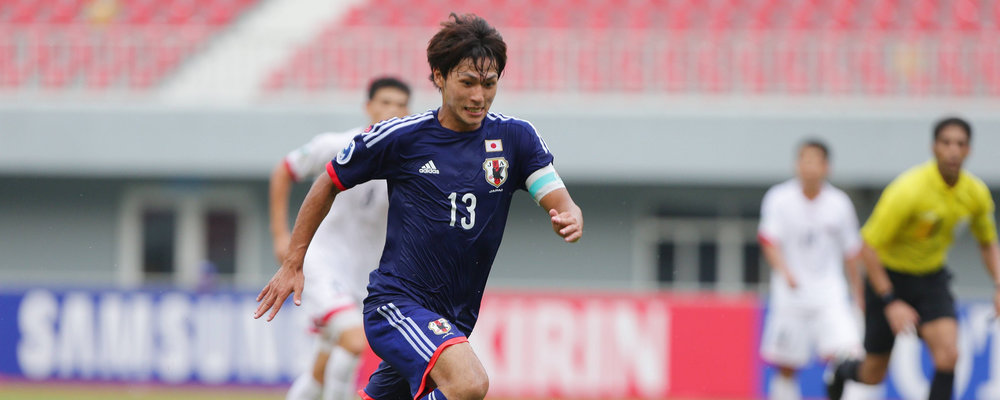
Japan men’s national team coach Javier Aguirre revealed his intention at a news conference at International Stadium Yokohama on 8th September that he would make some changes in his starting squad for their second game of the 2014 Kirin Challenge Cup against Venezuela.

The new boss played four players who were called up for the national team for the first time in their first game against Uruguay that was played three days before, but he said that he wanted to continue to check on his players’ skill-sets by using other men who did not see action in the Uruguay match. ”I want to see all of our players and we will substitute five players for tomorrow. Of course, we may make them during the match,” Aguirre said. ”In the early stage of the new team, we want to observe it first to determine what we want to do with it. Establishing the style for the team is more important than anything,” he added.

Aguirre said that he would look for a win, checking on his players, while he would also ask his squad to not repeat the same mistakes they made in their loss in the first game. ”We want to win this match. We lost the other day and just want a better result this time,” the Mexican said. Japan closed their practice to the media, except for the first 15 minutes of it, and elaborately worked on their final tune-ups under drizzling rains.

Japan and Venezuela have played twice and drew in both, including one that was played in August of two years ago. The South American side will miss forward Salomon Rondon (Zenit), who was ejected in the Korea match.

The contest will kick off at 7:20 p.m. at International Stadium Yokohama.

Open Letter to Shinji Kagawa

This is doing the rounds on the “web”. The only credit I could find is at the bottom of the page. I like this, it’s not mine – if anyone knows who wrote it I’d be very happy to credit (and use their writings in the future!!).

Hello Shinji,

I called it destiny when you arrived at Manchester United. I call it injustice when you have left just two years later.
Related

Every United fan was genuinely excited when you arrived. Having watched you tear it up for Dortmund, we were sure we had signed a world class player who would transform the club.

You were going to be our number 10. United had been famous for wing play, crosses and mainly the 4-4-2. We believed that you will bring about the modernization of the club, change the way we played. We were licking our lips at the thought of you and Rooney linking up.

I still vividly remember watching the first game of the 2012-13 season against Everton. On a night when everyone else struggled, you caught the eye by nonchalantly putting Javier Hernandez through on goal twice. But you were overshadowed by the (non) contributions of one Mr Robin van Persie, a trend which had continued till date and had finally resulted in your departure.

Over the course of the next two years, the number of games you started in your favoured position are just a handful. Gross injustice. The left wing was where you got stuck and that shackled your creativity.

In hindsight, the second season would perhaps have been better. Wayne Rooney may have left and you may well have made the number 10 your own, but all that went down the drain when David Moyes arrived. It was silly to expect a manager who likes a Tim Cahill/Fellaini type of number 10 to understand and even think of playing you. He played you there for a game and half and was rewarded with the best football under his tenure – against Bayer Leverkusen and Swansea.

Come the January transfer window, the club needed a ‘statement signing’ and on came Juan Mata to push you further down the pecking order. There were a few games where you both combined well, but that was just a flash in the pan.

You are a classic example of how things are not so straightforward at big clubs like United. Having talent isn’t enough. Fate. Destiny. Luck. Lot of factors kick in and agonisingly for you and the fans, you did not have those factors going for you.

Or perhaps it was just tactical. Maybe managers did not see your fast one touch pass & move based style fit in with the slower playing style of United. It was disheartening to see mediocre players get chance after chance while you were relegated to the bench. But for two years, no matter how much you were mistreated, there were neither any complaint nor any whining. You have always given your best and fans will always remember that with gratitude.

Some dreams are never fulfilled. Some goals are never fulfilled. Some journeys do not reach their destination. All we are left with is thoughts about how well it could have gone and regrets about how badly it has gone.

You have gone back to a place where everyone adores you. Where the coach knows how to get the best of you. We are all happy for you as your talents will be on show again.

On behalf of Manchester United and its fans, I wish you all the very best for your second innings at Borussia Dortmund. I will continue to follow your career closely. I hope that you make us regret selling you.

Regards,

A Manchester United fan and Shinji Kagawa admirer.

Cover-med

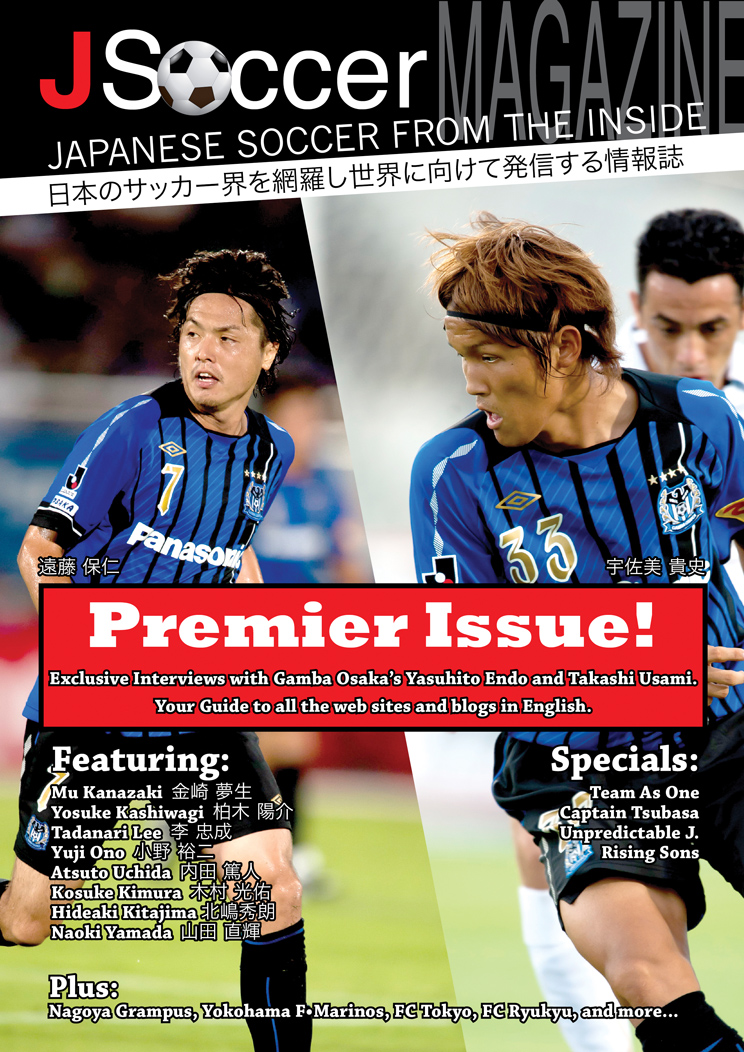
Yasuhito Endo Desperate” to Continue Playing for Japan National Team

There was not a hint of trying to do “an Ashley Cole” or follow in the footsteps of other players who announce their “retirement” from a national team when I asked Yasuhito Endo about his feelings on not being selected for Javier Aguirre’s first Samurai Blue squad…

“No, I have no intention of retiring from the national team set-up”, he said in Japanese after the Nabisco Cup quarter final 1st leg draw with Vissel Kobe on Wednesday night.

Endo was not too concerned with being overlooked for the Kirin Challenge Cup selection this time around as he understood that Aguirre and his staff wanted to see possible new faces, as opposed to players that were a known quantity.

I suggested that, after almost 150 caps, and with an aging body, the star defensive midfielder might want to slow down:
“No way, I definitely want to continue playing for Japan and I hope I am given the chance,” he retorted!

Gamba’s enigmatic number 7 continued: “I am sure that Aguirre is checking all options, including all of the new faces this time around. Perhaps some of them will not be selected again, others will prove themselves, while other players will be recalled later. I am hoping that I am one of those players”.

So, no desire to preempt his possible non-selection in the future by making a face-saving retirement announcement, then? I LIKE that! Whether he makes it into the squad again, or not – and there are arguments for both sides (his experience can help bring through new faces / his presence will hinder progress and the future is what Aguirre should be planning for?), the sterling service that Yasuhito Endo has given his country can not be underestimated.

The experienced player also noted that he’d like one final challenge and, finally, perhaps, a move overseas might yet be on the cards. I asked about a mooted move to Thailand rumoured last year, but he discounted that possibility: “The money is certainly available for a move to Thailand, but it’s not about the money. There are other things to consider, especially family. If I move, I’ll go where it suits my family because, even if it’s just a season, they would travel with me.”

Call me enamoured with a player who I have followed since his days at Yokohama Flugels, and watched regularly since he joined Kyoto (Purple) Sanga. Call me coloured by the fact that this star of major proportion agreed to do an exclusive interview and be the (co-, with Takashi Usami) cover star of JSoccer Magazine’s “Premier” Issue, but I, for one would be first on the plane to watch Endo’s debut if he decided to have a swansong overseas.

Jsoccer 1 COVER

Perhaps he will follow in the footsteps of his ex-Gamba (and Samurai Blue) team mate, Akira Kaji, and already the MLS Board (or however it is that they do their signings in USA) are wondering which team to allocate Endo to? I am sure he’d do any MLS team justice but I wonder if he’d allow a league to choose a team for him?

For those of you reading this and wondering why Endo never did make the move overseas long ago I can confirm that there was always interest from numerous clubs all over Europe but, in the first instance, when interest was peaking the player went down with Hepatitis C in 2006 and, again in 2008, just as he was due to join the Beijing Olympic team as an over-age player, he went down with a virus. This may well have put paid to initial possibilities of a move at his peak.

Staying in Japan didn’t hurt the player’s national team selection chances, thank fully and, who knows, a final “sayonara” year overseas might be on the cards!

The BEST of luck to you, “Yatto”, thanks for always being available to JSoccer Magazine, and JSoccer.com well before that!

Alan Gibson

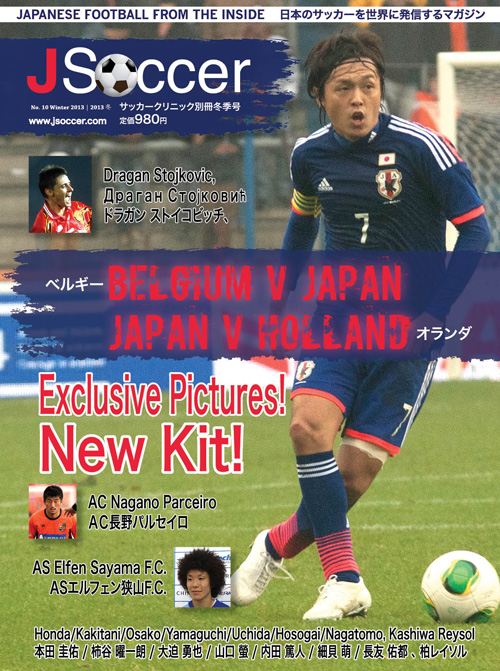
JSM10 cover

Javier Aguirre selects his first national team squad…

Japan squad, as chosen by Javier Aguirre today, 15.30 for games against Uruguay and Venezuela.

Goalkeepers:
Eiji Kawashima (Standard Liege, Belgium)
Shusaku Nishikawa (Urawa Reds)
Akihiro Hayashi (Sagan Tosu)

Defenders:
Hiroki Mizumoto (Sanfrecce Hiroshima)
Yuto Nagatomo (Manchester Un… uh, sorry Inter Milan, Italy)
Masato Morishige (FC Tokyo)
Maya Yoshida (Southampton, England)
Hiroki Sakai (Hanover 96, Germany)
Tatsuya Sakai (Sagan Tosu)
Gotoku Sakai (VfB Stuttgart, Germany)
Ken Matsubara (Albirex Niigata)

Midfield:
Makoto Hasebe (Eintracht Frankfurt, Germany)
Hajime Hosogai (Hertha Berlin, Germany)
Ryota Morioka (VIssel Kobe)
Takahiro Ogihara (Cerezo Osaka)
Gaku Shibasaki (Kashima Antlers)
Junya Tanaka (Sporting Lisbon, Portugal)

Forwards:
Shinji Okazaki (FSV Mainz 05, Germany)
Keisuke Honda (AC Milan, Italy)
Yoichiro Kakitani (FC Basel, Switzerland)
Yuya Osako (FC Koln, Germany)
Yusuke Minagawa (Sanfrecce Hiroshima)
Yoshinori Muto (FC Tokyo)

What do you think? Who is missing? Who is a shock?

P1010285 B

GK
川島 永嗣 カワシマ エイジ(スタンダール・リエージュ/ベルギー)
西川 周作 ニシカワ シュウサク(浦和レッズ)
林 彰洋 ハヤシ アキヒロ(サガン鳥栖)

DF
水本 裕貴 ミズモト ヒロキ(サンフレッチェ広島)
長友 佑都 ナガトモ ユウト(インテル・ミラノ/イタリア)
森重 真人 モリシゲ マサト(FC東京)
吉田 麻也 ヨシダ マヤ(サウサンプトン/イングランド)
酒井 宏樹 サカイ ヒロキ(ハノーファー96/ドイツ)
坂井 達弥 サカイ タツヤ(サガン鳥栖)*
酒井 高徳 サカイ ゴウトク(VfBシュツットガルト/ドイツ)
松原 健 マツバラ ケン(アルビレックス新潟)*

MF
長谷部 誠 ハセベ マコト(アイントラハト・フランクフルト/ドイツ)
細貝 萌 ホソガイ ハジメ(ヘルタ・ベルリン/ドイツ)
田中 順也 タナカ ジュンヤ(スポルティング/ポルトガル)
森岡 亮太 モリオカ リョウタ(ヴィッセル神戸)*
扇原 貴宏 オウギハラ タカヒロ(セレッソ大阪)
柴崎 岳 シバサキ ガク(鹿島アントラーズ)

FW
岡崎 慎司 オカザキ シンジ(1.FSVマインツ05/ドイツ)
本田 圭佑 ホンダ ケイスケ(ACミラン/イタリア)
柿谷 曜一朗 カキタニ ヨウイチロウ(FCバーゼル1893/スイス)
大迫 勇也 オオサコ ユウヤ(1.FCケルン/ドイツ)
皆川 佑介 ミナガワ ユウスケ(サンフレッチェ広島)*
武藤 嘉紀 ムトウ ヨシノリ(FC東京)*

※「*」は日本代表初選出。

Shinji Kagawa – a Manchester United Legend in the Making!

Shinji Kagawa was already playing for Barcelona when he was 12 years old – FC Miyagi Barcelona in Sendai, Japan, that is. This Kobe-born (well, technically, Tarumi-born, a Kobe suburb, but I am not letting that get in the way of me saying he is from my hometown!) football protégé had already turned heads at that early age and, eventually signed professional forms with Cerezo Osaka before finishing high school.

He became a lynchpin of a young Cerezo side in division 2 of the J.League and, while the Osaka team narrowly missed out on promotion three years in-a-row, they finally made it back into the top flight in 2010. Kagawa had come close to a goal every other game over a century-plus of appearances, including 27 in 44 games in that successful promotion-winning season, and J1 defences soon found out he was the real deal as he notched seven goals in his 11 J1 games before boarding the plane for Germany.

It was clear in that first season in J2- and I saw him close-up, often – that this teenager was destined to be a star. Veterans of the team gushed praise, TV stations clamoured to get him on their shows and the fans wearing Kagawa on their backs soon outnumbered others, by far. When long-serving Cerezo Osaka and Japan hero Hiroaki Morishima retired, after 17 years at the club, Kagawa was given the coveted no.8 shirt – a huge honour for the player, and a bold statement from the club on the faith that they had in this youngster.

Even now, after two successful campaigns far away in Germany and a move to England on the cards, one can still see countless Kagawa no.8 shirts on the terraces at a Cerezo Osaka game – such is the adulation for their hero.

What is even more amazing – especially to those outside Japan who don’t know of the adulation bestowed upon their heroes by the Japanese fans – is that, after Kagawa announced he was leaving the club, attendances rose as fans clamoured to see their hero one more time in the pink shirt of Cerezo. They did not come to pour scorn upon him, or call him a traitor. They did not come to accuse him of deserting their team just as things had begun to look promising. They didn’t look down upon the youngster, thinking his head had been turned by money… they turned up in their thousands to see him on his way! In his final game in the J.League – which I witnessed firsthand – the average attendance was left way behind and, as Kagawa took a lap of honour around the field – collecting countless presents, letters, bunches of flowers – the away fans – who had just seen their team beaten by, you couldn’t have scripted it better, a winning goal from Kagawa – gave the player a standing ovation and chanted his name! Only in Japan!

Thanks in part to the strength of player agents in Japan, and the weakness and inexperience of clubs who are left with little choice but to accept contracts that heavily favour the freedom of the player (allowing the agent to shop the player around cheaply), Borussia Dortmund paid a reported fee of just 350,000 Euros – due to a release clause in his contract if it was for a move abroad – and the 23-year-old midfielder played a key role in Borussia Dortmund’s two championships in-a-row, including the Double-winning success of 2011-12. The Bundesliga team were very reluctant to allow him to leave, however, with just a year left on his contract, and the player making public his desire to move to the Premier League, they had to sell or risk losing him for free in 2013. Reports suggest that Dortmund offered to triple his salary if he extended his contract, so it is clear that money is not the top priority for the talented Japanese.

“Manchester United is delighted to announce that it has agreed terms with both Borussia Dortmund and Shinji Kagawa for his transfer to the Club,” read a statement from Manchester United today… “The deal is subject only to the player medical and obtaining a UK work permit. These conditions are anticipated to be completed by the end of June.”

While that work permit may not be guaranteed, due to a metatarsal injury that forced him out of Japan’s triumphant Asian Cup campaign in 2011 – surely the “player of special talent” loophole that has been used in the past can come to the rescue! If ever there was a “special talent”, then Shinji Kagawa is it! Upon returning from that injury he still managed to get back to full fitness and core – regularly – making the Bundesliga team of the Year! Anyway, in the back of my mind I am pretty sure that games when a player was not available through injury, but “experts” consider he would have been chosen if not for the injury, are taken into consideration in the long run, and the percentages adjusted. Anyone have any small print details!!?

While Kagawa has been racking up the goals and the medals in Germany, he has not been neglecting those fans of his in his homeland and recently became the youngest ever player to reach ten goals for his country. In less than 30 games. From midfield. How can anyone doubt that this dynamic playmaker will succeed in the Premier League!?

Manchester United will be gaining a player who is as comfortable out wide on either side of an attacking midfield as he is in the hole behind the forwards. He can create space and goal-scoring chances with devastating vision and inch-perfect passes, while possessing a turn of pace that can give the player himself the openings that bring goals. I know, I’ve been watching since this kid first strode out in a Cerezo Osaka shirt! He’ll do the red of Manchester United proud.

It says a lot about the state of the transfer market – as well as Manchester United’s finances, perhaps – that the reported (initial) price of 17.5 million Euros is seen as relatively modest but, whereas Chelsea have splashed bigger cash on, perhaps, as yet unfulfilled potential in Eden Hazard, United have something close to the finished article arriving at old Trafford for the new season!

If Sir Alex Ferguson gives Kagawa the no.7 shirt, have no doubt that this Rising Son can add to a legend that includes the names of Best, Robson, Cantona, Beckham and Ronaldo!

END

Alan Gibson is based in Kobe, Japan and is the editor of JSoccer Magazine – Japanese Football in English (and Japanese!). Issue 4 is out June 15th and features Shinji Kagawa, as well as the next Japanese player to take the Bundesliga by storm – Hiroshi Kiyotake – joining Nurnberg after the London Olympics. JSoccer Magazine is available through the web site www.jsoccer.com (PDF or old-fashioned full colour magazine), mail alan directly at alan@jsoccer.com or follow Alan on Twitter and get the details there @JSocccerMagazine

Alan Gibson is editor of JSoccer Magazine and owner of www.jsoccer.com, and has been in Japan for over 20 years and covered the J.League for various publications – until starting his own – since the opening day! He regularly referees J.League teams’ friendly matches, takes care of the English side of the web sites for both Vissel Kobe and Gamba Osaka and is known to do some stadium announcing, too! J.League from the inside – for sure!